Newsletter Subscribe
Enter your email address below and subscribe to our newsletter

 ByJohn A
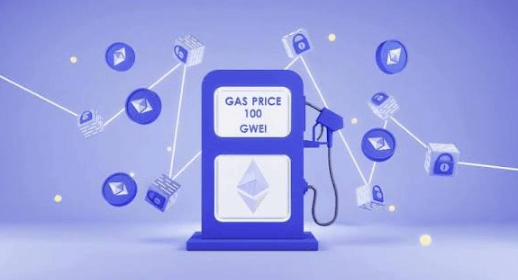
Ethereum gas fees function as incentives for processing transactions and smart contracts, balancing user demand with network capacity. Prices, limits, and actual usage shape total cost, while congestion signals health and governance dynamics. The system remains transparent yet volatile, with mempool dynamics driving bids and delays. This interplay raises questions about efficiency, fairness, and alternative design choices, leaving the reader with a potential path to optimize timing and costs without sacrificing capability.
Gas fees on Ethereum are the payments required to compensate miners (or validators in proof-of-stake) for processing transactions and executing smart contracts.
The mechanism reflects tokenomics basics, balancing incentives with network growth.
Fees signal demand, affect throughput, and influence participation in governance.
Critics view them as external constraints that shape user autonomy, while proponents see them as essential, decentralizing, and accountable network governance.
How do Ethereum gas price, limit, and usage together determine transaction costs? The interaction sets a total fee: price × gas used, bounded by user-specified limit. Higher price mitigates delays during congestion; greater limit enables complex transactions. Fee mechanics and network congestion influence efficiency, signaling value and risk. Evaluations emphasize transparency, predictability, and freedom from opaque surcharges.
Prices and usage patterns drive abrupt shifts in Ethereum gas costs, and understanding mempool signals helps explain these spikes.
The analysis centers on supply-demand gaps, batch arrivals, and priority bidding, revealing how prices leap when congestion hits critical thresholds.
Observers track mempool timing and rapid transactionoracles to forecast pressure, not applaud volatility, promoting disciplined participation amid evolving network dynamics.
See also: Understanding the Importance of Business Data Security
Estimating and reducing Ethereum gas fees requires a disciplined, data-driven approach that translates network signals into actionable cost strategies. The analysis emphasizes budget tracking and fee estimation as core practices, enabling proactive adjustments rather than reactive spikes.
Practical steps include monitoring block-by-block fee trends, timing transactions, and selecting appropriate gas prices.
Optimization emphasizes efficiency, transparency, and freedom through disciplined, evidence-based decision-making.
In a quiet harbor, a lighthouse keeper tends three lamps: price, limit, and usage. The glow guides ships through foggy demand, but misread fuel and the light swells into a storm of fees. Data is the keeper’s compass: mempool currents, network health, and timing reveal when to burn bright or dim. With disciplined estimates, costs fall into line, steering users toward safer, clearer passages where value and speed illuminate the voyage across Ethereum’s volatile seas.