
Newsletter Subscribe
Enter your email address below and subscribe to our newsletter

 ByJohn A
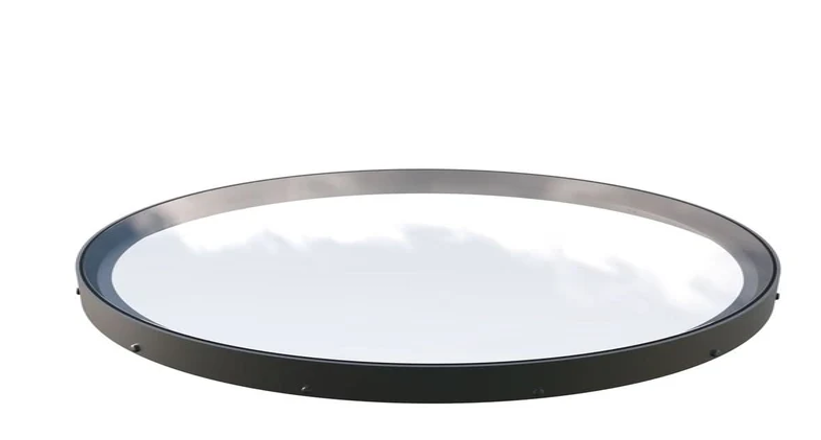
Circular rooflights introduce a different visual language from the more familiar square and rectangular openings. Their curved form can soften a ceiling dominated by straight lines while bringing daylight into areas that may have limited access to windows.
An opening circular rooflight has another practical advantage: depending on its design, it can provide ventilation as well as natural illumination. An opening circular rooflight can be particularly useful in kitchens, bathrooms, loft spaces, extensions, and other rooms where improved air movement is important.
Most architectural elements are based on straight lines. Doors, windows, cabinets, flooring, and furniture commonly use rectangular forms. A circular rooflight breaks that pattern.
The contrast can make the ceiling more visually interesting without requiring decorative finishes. A single round opening can act as a focal point in an otherwise simple room.
The effect is especially noticeable in minimalist interiors, where small changes in geometry have a strong visual impact.
Rooflights allow daylight to enter from a different direction than conventional windows. This can be valuable in rooms surrounded by neighbouring structures or spaces located deep inside an extension.
A circular opening spreads daylight around its edges and creates a distinctive pool of illumination beneath it. The exact result depends on the diameter, glazing specification, roof construction, orientation, and surrounding surfaces.
Light-coloured ceilings can help distribute the daylight further into the room. Darker materials absorb more light and create a stronger contrast.
Ventilation is one of the main reasons to consider an opening rooflight rather than a permanently fixed unit.
Warm air rises naturally. An opening near the highest part of a room can provide an outlet for warm or humid air, particularly when lower-level windows or doors can provide replacement air.
This can be useful in kitchens after cooking or bathrooms following showers. Loft conversions may also benefit because upper-level spaces can become noticeably warmer than lower floors.
The effectiveness depends on the room’s size, other openings, weather conditions, and the rooflight’s opening area.
Bathrooms often require reliable ventilation because showering and bathing produce significant moisture. An opening circular rooflight can combine privacy with daylight and controlled air movement.
Unlike a conventional window at eye level, a rooflight directs the view upward. This can reduce concerns about overlooking while still providing natural illumination.
The opening mechanism should be appropriate for a humid environment, and the surrounding construction must be properly sealed and detailed.
Mechanical extraction may still be required depending on building regulations and the property’s ventilation strategy.
A circular rooflight can give a kitchen extension a distinctive architectural detail. It can be positioned above a dining table, island, or circulation area.
A round opening above a kitchen island creates a visual centre without competing with cabinetry. Pendant lights can be positioned around it rather than directly beneath the rooflight.
Another approach is to place the circular rooflight closer to a dining area. The changing daylight can make the table feel like a separate zone within an open-plan layout.
Larger rooms can accommodate more than one circular opening. Repeating the same shape can create rhythm across a ceiling.
The openings do not necessarily need to be identical in size. A larger central rooflight with smaller surrounding units can produce a hierarchy, while several matching circles create a more regular arrangement.
Spacing should relate to the structural layout and furniture beneath. Random placement can appear accidental, whereas carefully aligned openings can become part of the architectural grid.
A rooflight can influence the ceiling beyond the opening itself. Curved plaster reveals, timber detailing, or recessed lighting can emphasise its shape.
A shallow circular reveal produces a subtle appearance. A deeper reveal creates more shadow and gives the opening greater visual weight.
The ceiling finish should be selected carefully because daylight will highlight imperfections around the edge.
An opening rooflight can be manually operated or controlled through an electric mechanism, depending on the model. Remote operation can be useful where the rooflight is positioned beyond normal reach.
Some systems can be connected to sensors or automated controls. Such features may allow ventilation to respond to temperature, humidity, or weather conditions.
Rain sensors can also be useful for automatically closing an opening if weather conditions change.
The exact functions vary between products, so the operating system should be considered alongside the building’s ventilation requirements.
Additional daylight can also bring additional solar heat. This is particularly relevant in rooms with large areas of roof glazing.
The effect depends on roof orientation, glazing properties, shading, surrounding buildings, and the time of year. Rooms facing strong afternoon sun may experience more heat than those receiving softer morning light.
Glazing with suitable solar-control characteristics or external shading can help manage this issue. Ventilation through an opening rooflight may also assist with heat release, although it should not be relied upon as the sole method of summer temperature control.
See also:Smart Investment Strategies for Business Owners
The circular shape needs to be incorporated into the roof structure from the planning stage. Structural members, insulation, waterproofing, drainage, and the roof finish all need to accommodate the opening.
The installation detail should also prevent water from collecting around the rooflight. Proper flashing and weatherproofing are essential.
For a retrofit project, the existing roof structure should be assessed before selecting the opening.
An opening circular rooflight can combine three qualities that are useful in residential design: natural light, ventilation, and visual character. Its rounded shape provides an alternative to conventional rectangular roof glazing, while its opening function can assist with air movement in suitable rooms. With careful planning around structure, ventilation, solar exposure, and interior finishes, a circular rooflight can become a practical architectural feature rather than simply another window.
