Newsletter Subscribe
Enter your email address below and subscribe to our newsletter

 ByJohn A
Managing business travel expenses can become a time-consuming task when employees regularly drive for work. Client meetings, site visits, supplier appointments, conferences, and other professional activities can generate numerous journeys that need to be recorded accurately.
When mileage is tracked manually, employees may have to write down distances, calculate totals, organise receipts, and transfer information into expense reports. For businesses with several travelling employees, this can create a considerable administrative workload.
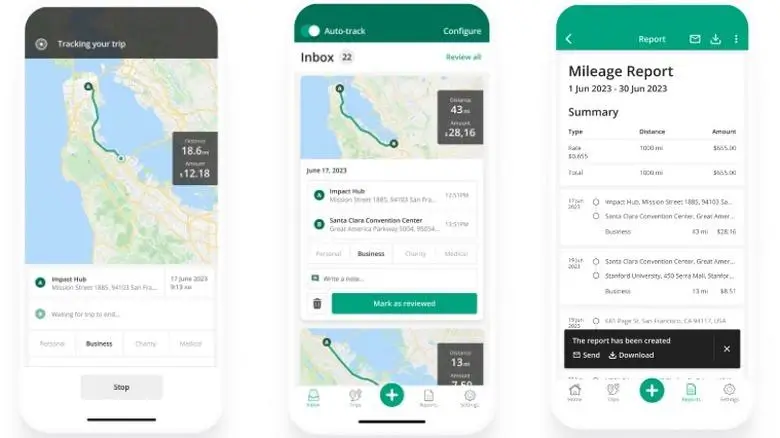
The best business mileage tracker app can simplify this process by helping employees record journeys digitally, organise travel information, and prepare more consistent mileage records. With the right tracking approach, businesses can reduce repetitive administrative tasks while improving the accuracy and accessibility of travel information.
Business expense reporting often involves more than simply entering a total amount. Employees may need to provide details about when they travelled, where they went, how far they travelled, and why the journey was necessary.
When these details are collected manually, several issues can occur.
Employees may forget individual journeys, miscalculate distances, lose receipts, or delay submitting their records. Administrative staff then have to spend additional time reviewing and correcting the information.
For businesses with frequent travel, these small tasks can accumulate into a significant amount of administrative work.
A digital mileage tracking system provides a more structured way to record work-related journeys.
Instead of waiting until the end of the week or month, employees can maintain their records throughout their normal work routine.
Depending on the available features, a mileage tracking app may help users record:
Having this information organised digitally can make the expense reporting process easier to manage.
One of the biggest sources of unnecessary work is calculating mileage manually.
Employees may need to compare odometer readings, calculate individual trip distances, and add multiple journeys together. When many trips are involved, this process can be repetitive and increases the possibility of calculation errors.
Digital tracking can simplify these calculations by recording or processing mileage information electronically.
Employees can spend less time working out the distance for each journey.
Automated calculations can reduce mistakes caused by adding multiple distances manually.
When individual journeys are stored together, employees can review their total mileage for a particular reporting period more efficiently.
Searching for travel information can take almost as much time as recording it.
Employees may otherwise keep mileage details in spreadsheets, notebooks, emails, calendars, or other separate records. When an expense report is due, they have to collect information from multiple sources.
A centralised mileage record can make this process more straightforward.
Instead of searching through different documents, employees can review their recorded journeys in one organised location.
This can also help managers and administrative teams when they need to review submitted mileage information.
A well-organised mileage history can provide much of the information required for a travel expense report.
For example, an employee may be able to review their journeys for a particular month and identify:
This can reduce the amount of time spent compiling information manually.
Businesses can also establish standard reporting procedures so employees know exactly what information needs to be submitted.
See also: Smart Investment Strategies for Business Owners
Saving time is valuable, but accurate records are equally important. Incorrect mileage information can lead to additional work when reports need to be checked or corrected.
Digital tracking can help create more consistent records, but employees should still review their entries before submitting expenses.
A quick review can identify:
Finding these issues early is generally easier than correcting them after an expense report has already been submitted.
Many employees use the same vehicle for both work and personal travel. Mixing these journeys can make expense reporting more difficult.
A mileage tracking app can help users categorise trips based on their purpose.
For example, a customer meeting can be recorded as business travel, while a personal shopping trip can remain outside the business mileage record.
Maintaining this distinction helps create clearer expense reports and reduces the need to manually separate journeys later.
Mileage tracking does not only save employees time. It can also reduce the workload for finance, payroll, and administrative teams.
When employees submit consistent mileage records, managers may spend less time requesting missing information or correcting unclear entries.
A standardised process can make it easier to:
Managers can examine submitted journeys and mileage totals using a consistent format.
Organised records make it easier to identify missing or unusual details.
Businesses can retain structured travel information for future reference according to their applicable record-keeping policies.
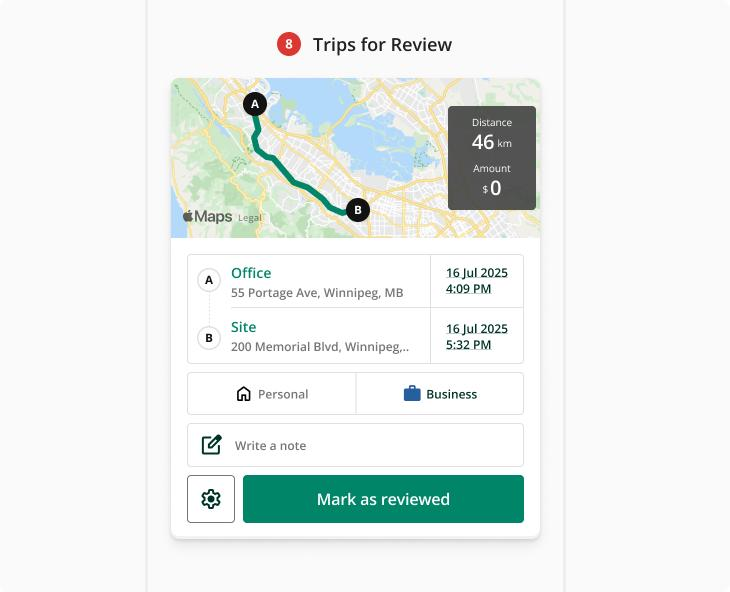
When evaluating the best business mileage tracker app for a company’s needs, certain features can have a direct impact on administrative efficiency.
Automatic tracking can reduce the need for employees to manually record every distance, although users should review and correct entries where necessary.
Business and personal journeys can be separated more easily when categories are available.
A clear history makes it easier to find previous journeys and prepare reports.
Recording mileage alongside other relevant travel expenses can help keep information organised.
Useful reports can make it easier to review mileage information and transfer relevant data into the company’s existing expense processes.
Even the most useful tracking technology works better when employees follow consistent procedures.
Businesses should provide clear guidance covering when journeys should be recorded, how trips should be categorised, and when expense information should be submitted.
Employees should also understand the company’s requirements regarding mileage reimbursement, supporting documentation, privacy, and applicable tax or regulatory obligations.
A simple process could involve recording each business journey promptly, reviewing the mileage history weekly, and submitting complete records according to the company’s reporting schedule.
The benefit of digital mileage tracking may seem small when looking at a single journey. However, the time saved can become significant when employees travel frequently.
Consider an employee who makes several business trips every week. If each journey requires manual distance calculations, note-taking, and later data entry, the administrative time can quickly accumulate.
A streamlined digital process can reduce these repetitive activities. Across a team of employees, the overall time saving may become even more noticeable.
Expense reporting is an essential part of business travel management, but it does not need to involve unnecessary administrative work. Manual mileage records can take time to maintain and may lead to missing information, calculation errors, and additional checking.
The best business mileage tracker app can help simplify the process by organising trip details, reducing manual calculations, maintaining mileage histories, and supporting more consistent expense reporting.
The most effective approach combines digital tracking with clear company procedures. When employees record journeys regularly and review their information before submission, businesses can spend less time correcting mileage records and more time focusing on their everyday operations.